Our morning was mostly spent packing as we had reached the end of our six-day stay at our room in the rotating house. Breakfast consisted of pretty much any food we had left at the house, a healthy mix of Island Chocolates, OREO cookies, and Kinder eggs for the kids. Before we checked out, we snapped a few photos from the benches in the house’s backyard, to document our view.

Given the day’s driving requirements, we had little time for lunch, meaning our stop at Glasgow Glen Farm had to be short. Amanda and I went inside while the rest of our traveling party waited in the van. The shop was known for its gouda cheese and on-site bakery, so we picked up pieces of classic and pizza-flavored gouda and a baguette to enjoy on the road.

After lunch, we made a quick stop in Charlottetown for a Starbucks run and to drop off some miscellaneous laundry to be done for pickup later in the afternoon. Our first destination of the day was Point Prim, a peninsula featuring the island’s oldest lighthouse and the only circular brick lighthouse in Canada.

On the way to Point Prim, we stopped by a small gas station and purchased Seaman’s Ginger Ale, which originated in PEI. A few sips for Amanda and me were plenty.

Built in 1845, Point Prim is Prince Edward Island’s oldest lighthouse.
The official opening date for the lighthouse was Saturday, but our itinerary only allowed visiting on Friday. Wanting the opportunity to go inside, I emailed in advance and arranged for a lighthouse employee to meet us; for $50, we had a 3-hour window to access the 170-year-old facility. The day’s nice weather meant we weren’t the only visitors, so as a bonus, anyone else visiting the lighthouse during the timeframe was able to visit inside for free.

As we waited to get in the lighthouse, Emmie posed outside.
Emmie wasn’t interested in climbing the 48 steep stairs, so along with Eilidh, she stayed on the first level while Amanda, Gee Gee, Noah, and I climbed to the top of the lighthouse’s four levels. Along the way we saw the space a lighthouse keeper once lived and took in impressive views from the very top.

Emmie and Eilidh were in the very capable hands of the lighthouse worker we met a few minutes before climbing to the top of the tower.


View from the lighthouse’s third-floor windows.


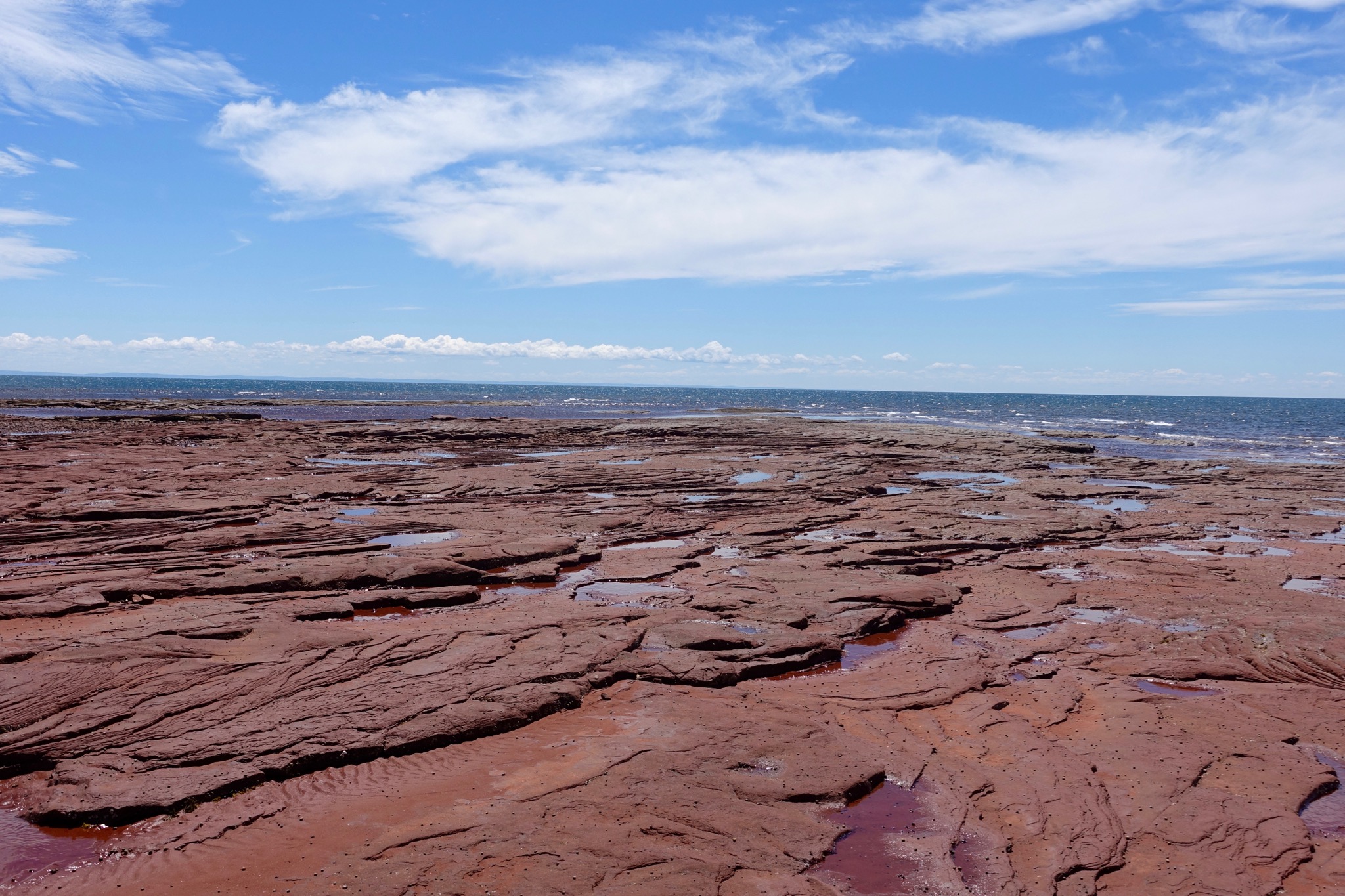
After a bevy of photos outside the lighthouse, we hiked down to the adjacent shoreline. Noah loved collecting the many tiny twirly shells, and Emmie loved making splashes by jumping in the puddles. Gee Gee took her turn with Eilidh in the Tula, and we again posed for many photos with the picturesque water and lighthouse backdrops.


On our drive leaving the peninsula, Amanda and Gee Gee stopped at a small art studio, leaving only with a photo of Gee Gee in front of the pretty flowers in the yard. They also took Noah and Emmie in another bottle house attraction on the island, albeit this one was free. The buildings are all named after the builder’s grandchildren, starting with Noah’s Church.


Late afternoon was dedicated to digging for clams with island residents John and Jackie Gillis. Following introductions, we put on boots, grabbed shovels and buckets, bundled the baby in her carseat, and walked down the wooden staircase to the river shoreline. While Jackie was in charge of cooking the clams when we were finished digging, John was responsible for teaching the clam-digging process.

Noah and Emmie were ready with buckets to collect the clams.


Noah and Emmie watched us dig, held clams, and at times were responsible for the buckets.


Digging for clams leaves large water holes, which remain open until high tide a few hours later.
Clams were identified by holes in the sand, and it took some practice to figure out proper shovel placement to avoid cracking the clam’s shells. After digging, we used a ring on the buckets to measure the size, with clams under 2 inches being returned to the water. By the time we were finished, the adults had their share of clam-digging, the kids had pants covered in mud and water, and we were ready to take a batch of clams back to the house for dinner.


Clams were gently washed and inspected before being placed into the pot for cooking. Soft-shell clams were boiled while hard-shell quahogs were grilled.
In addition to clams, we all sampled one oyster. It’s safe to say none of us will become clam-eating fanatics; the boiled soft-shell clams were definitely enhanced by the melted butter and were far more enjoyable than the large, chewy hard-shell clams. Ample bread, bacon bits, and homemade lemonade helped offset the clam texture and taste. Despite our solidly Midwestern tastebuds, the overall experience provided a fun afternoon for all.


Our room in the rotating house was reserved for seven nights, but we decided to skip the final night in favor of a short stay in New Brunswick to see Hopewell Rocks in the Bay of Fundy. This meant extra driving, and the longest stretch of the driving followed our clam-digging experience. The highlight of the 150-minute drive was a trip across the world’s longest bridge built over icy water.

The Confederation Bridge opened in 1997 after four years of construction and marked the first time travelers could get to Prince Edward Island in their cars without using a ferry. Spanning 12.9 kilometers, or 8 miles, we spent about 12 minutes crossing the impressive bridge and taking in views of the water, and shores of Prince Edward Island, New Brunswick, and Nova Scotia.

Our first stop in Moncton, New Brunswick, where we were spending the night, was at Kings Ice Cream. We’ve generally been a bit underwhelmed by the frozen dessert offered in Atlantic Canada, and this stop was no exception. It is worth noting, however, that the “just a taste” size of ice cream was ridiculously large. We all had plenty of ice cream, with Amanda and I being the only eaters to finish our entire servings.

Once we were settled into our hotel room for the night, and the kids were well on their way to sleeping, I made one final trip out to the local Atlantic Superstore and a Canadian restaurant chain, Greco Pizza. Not completely full from our clams and ice cream, I took back a personal-sized pizza and order of garlic cheese sticks to the hotel. The pizza was ordinary but garlic sticks tasty.


Note the French language “open” sign. French was much more prevalent in New Brunswick, Atlantic Canada’s only officially bilingual province.
